
From Whelp to Wean: Wobbly Explorers
WHELPING BOX SERIES
Marissa
1/5/20267 min read
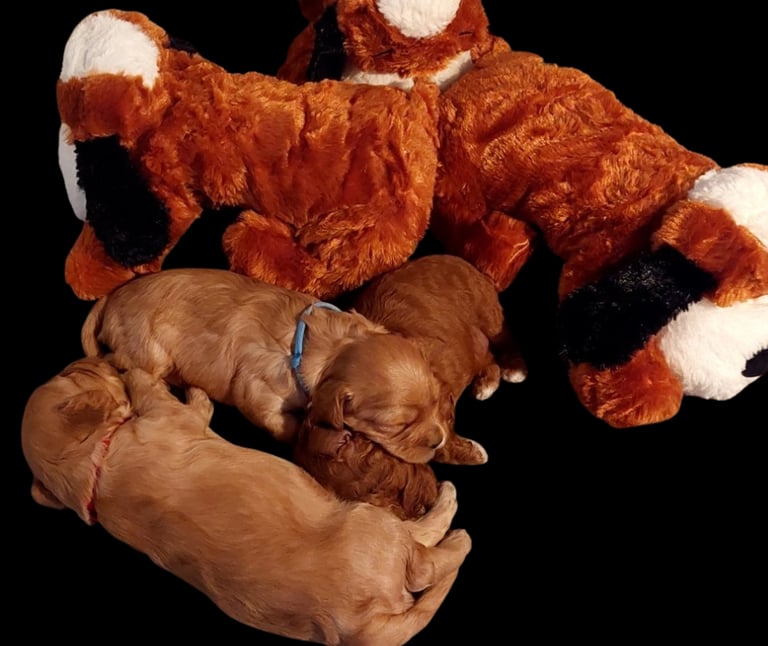
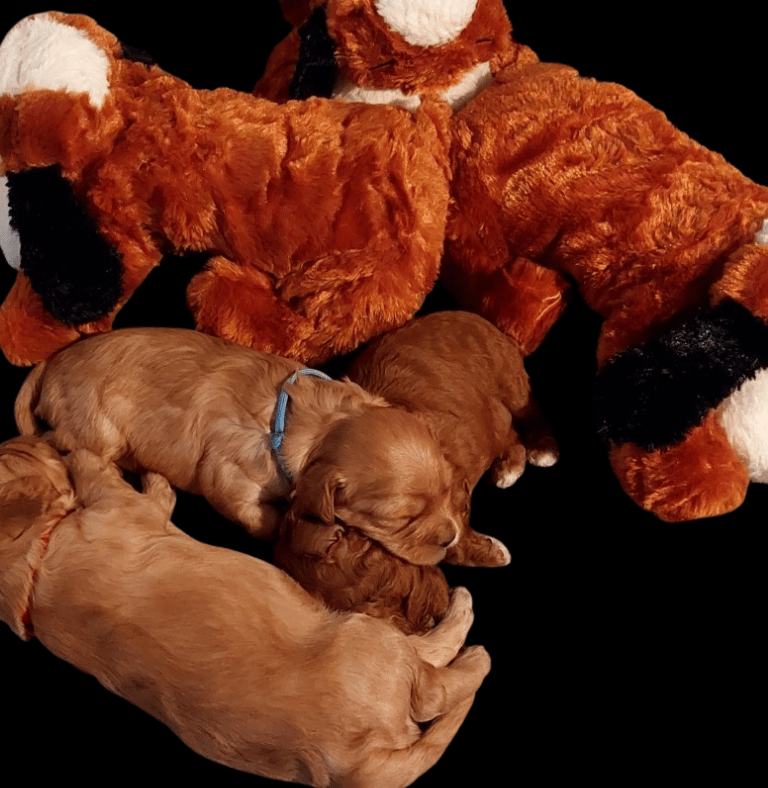
Days 15–21 are a joyful turning point — the transitional stage when tiny, helpless newborns begin morphing into curious little explorers. The Toybox Trio have opened their eyes and ears and are wobbling about on unsteady legs, gradually becoming aware of one another and everything around them. This week the whelping box will have the Playpen extension added, transforming it from a cosy nest into a discovery nook.
Vision and hearing are slowly sharpening, sparking curiosity, and those awkward, determined movements are turning crawling into tentative walking. Quiet observation is giving way to clumsy play, first snuffles, and the occasional dramatic tumble — all the first steps of social learning, emotional expression, and the kind of physical confidence that will have them racing across the lawn in a few weeks.
Milestone Moments
Eyes open: By now, all three pups can see, though their vision is still blurry.
Ears open: Hearing begins around day 18–20, so they’re starting to respond to sounds.
Teeth erupt: Still gummy but their tiny milk teeth are pushing their way to the gums.
Mobility: Crawling has progressed to wobbly walking; coordination is poor but improving.
Weight gain: Growth is rapid, with each pup steadily increasing and thriving.
From Milk to Mush
Nutrition is still centred on Poppet’s milk, but with teeth erupting and growing strength, the pups are edging closer to their first taste of soft food. By the end of Week 3, I will begin introducing a gentle prelude to weaning, though for now milk remains the perfect fuel.
Preparing for the Future
With mobility increasing, safety becomes a priority — the whelping box must stay secure to prevent wandering. Cleanliness and warmth remain essential, but now I’m also preparing for the next stage: expanding their environment and introducing soft food. Careful monitoring ensures each pup thrives, while Poppet gets the rest and nutrition she needs.
Future Parents
Week 3 is when puppies begin to truly connect with the world. Their eyes and ears open, their movements become more deliberate, and their first play behaviours emerge. This is the foundation of socialisation, ensuring that by the time they join your home, they’ll be curious, resilient, and ready to bond.
Socialisation & Bonding
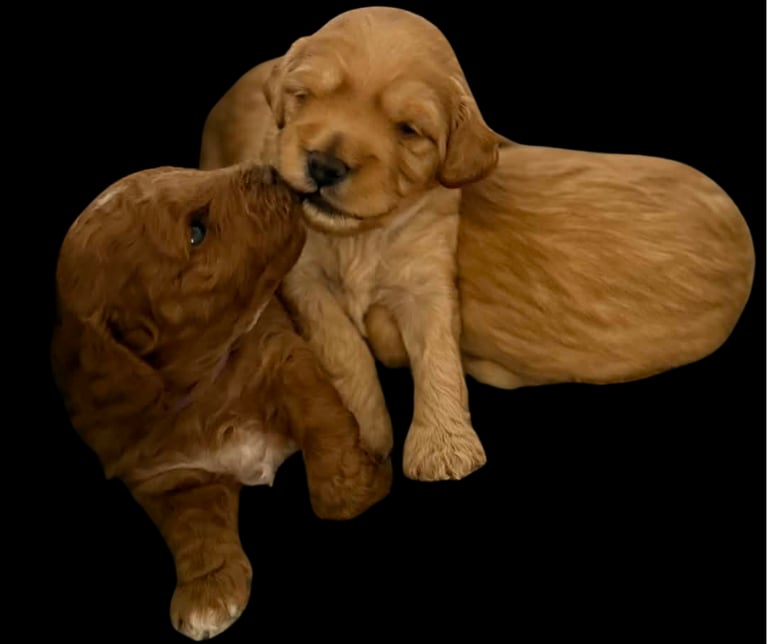
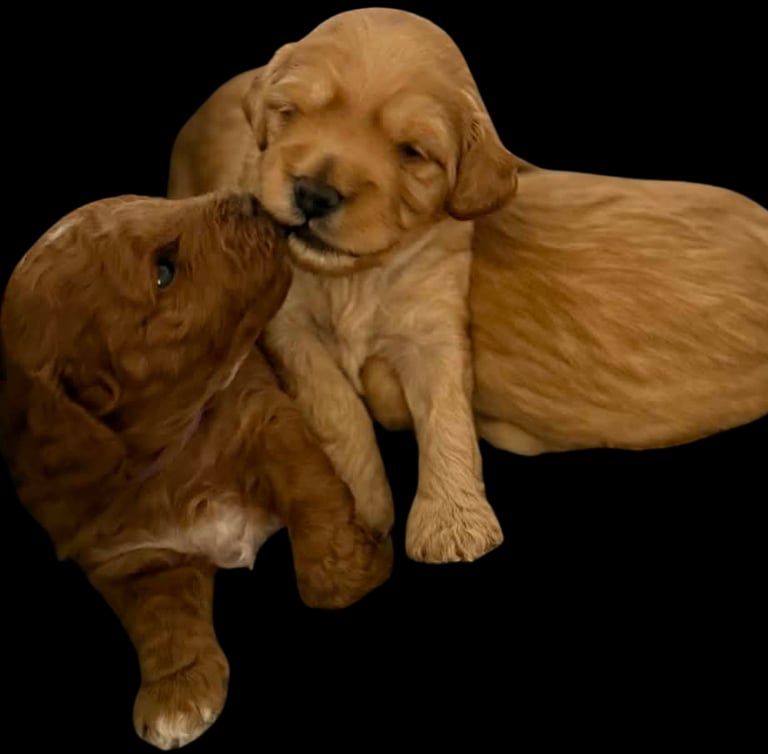
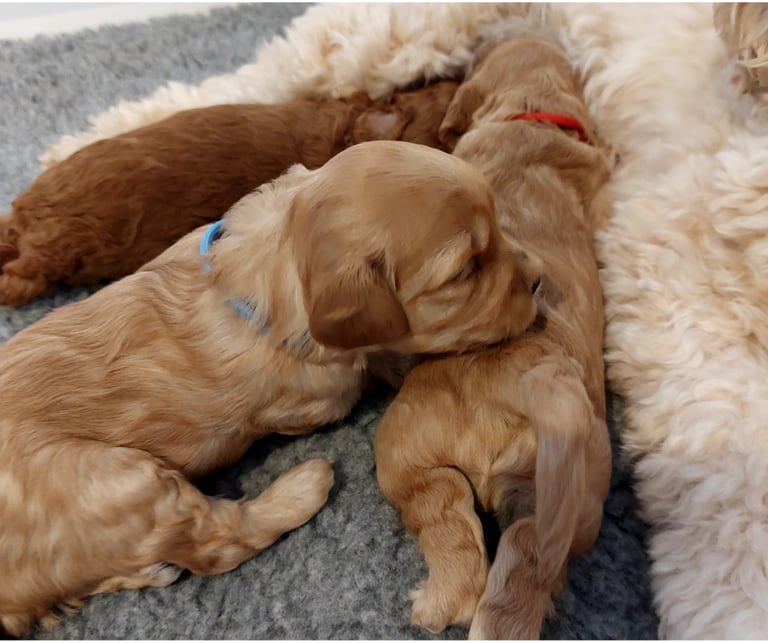
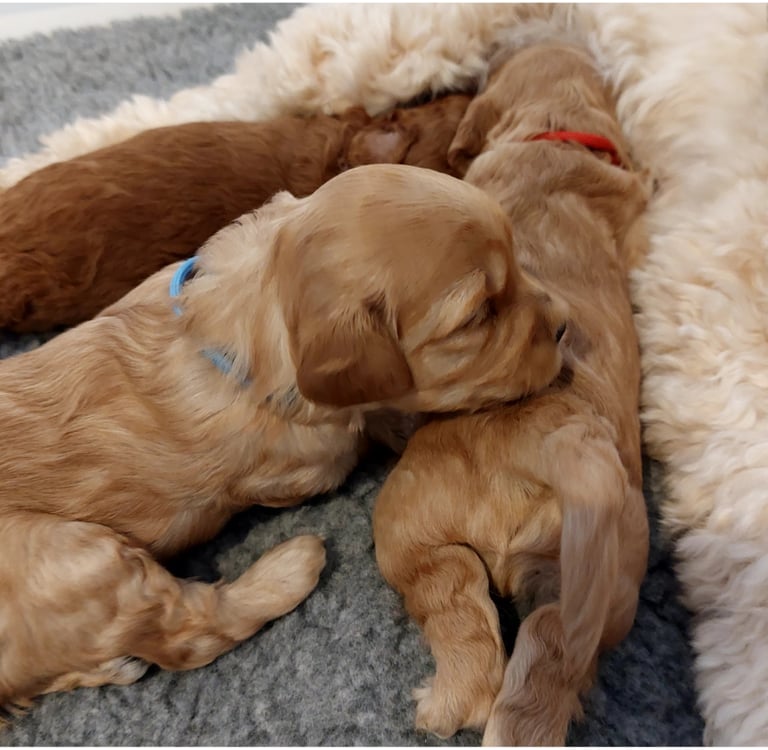
Week 3 is when the puppies really start to practise being puppies. Their front and back legs are strengthening so they can fully support their bodies, which opens the door to proper exploration and play. Crawling becomes wobbling walking, and the litter shifts from a cosy cluster to a lively little social group.
Their ENS (Early Neurological Stimulation) and ESI (Early Scent Introduction) sessions are now complete, giving them a solid foundation of resilience and sensory awareness. With that base in place, the Toybox Trio are ready to move from the nursery into Playschool, where I begin my structured Puppy Curriculum. Playschool is gentle and progressive: new textures, soft challenges, and short, supervised social tasks that encourage curiosity, confidence, and healthy interaction.
Environment and enrichment are tailored to encourage safe exploration. This week I add the Playpen extension and introduce varied flooring — fleece, rubber mats, and faux grass — to build proprioception and paw awareness. Soft barriers and gentle lighting keep things interesting without overwhelming them. I rotate soft toys with different textures and quiet crinkles to teach cause and effect and keep novelty high.
Short solo moments (1–2 minutes) away from littermates begin now. Placing a pup in a cosy, enclosed space with a familiar scent cloth helps them experience gentle independence while still feeling secure. Most will vocalise briefly, then settle; these tiny separations lay the groundwork for crate training and emotional resilience.
Health & Care
Puppies were weighed daily for the first 14 days and as they’re all showing strong, steady gains, I’ll move to weekly weigh‑ins from now on. I keep a close eye on overall body condition and gums for tooth eruption which will indicate that it's time to slowly begin the weaning process with the introduction of solid food. Wobbly walking on the VetBed continues to support their strengthening limbs by providing traction and gentle cushioning for developing joints.
I observe each pup for key markers of progress:
Coordination: Can the puppy walk without tipping over?
Recovery: How quickly do they bounce back after a stumble or surprise?
Social play: Are they initiating interaction or responding passively?
Temperament traits: Are any puppies showing early signs of leadership, gentleness, boldness, or sensitivity to help guide enrichment and future home matches?
Response to stimuli: Do they turn their heads, startle, or vocalise in reaction to noise?
Puppy Personalities Emerging
The Toybox Trio still behave very similar, but I am observing for tiny, repeatable behaviours that hint at who each pup might become. A longer, steady gaze from one, a determined little shuffle from another, or a pup that bounces back quickly after a stumble — these small moments are the first threads of personality showing through.
How personality develops
I think of temperament as the product of three things: genetics, early environment, and experience. Genetics set a baseline, but the transitional window around days 15–21 is especially receptive. The handling, textures, sounds, and gentle challenges I introduce now can nudge development in helpful directions, so positive, low‑stress experiences are a big focus.
What I watch for
Initiation vs response: Who starts play and who waits to be invited.
Recovery time: How quickly a pup settles after a surprise.
Exploration drive: Who investigates new textures or toys first.
Gentleness: How a pup mouths or interacts with littermates.
These early patterns help me tailor enrichment — more confidence‑building for shy pups, impulse control games for bold ones — and make better matches with future homes. Observations now also guide training priorities and help reduce the risk of fear‑based behaviours later.
A quick, friendly reminder: these are first impressions, not destinies. Week 3 is a time of rapid change — a shy pup can bloom with gentle encouragement, and a bold pup can learn calm with consistent boundaries. I keep notes, stay patient, and enjoy those tiny, telling moments; they’re the opening lines of each pup’s personality story.
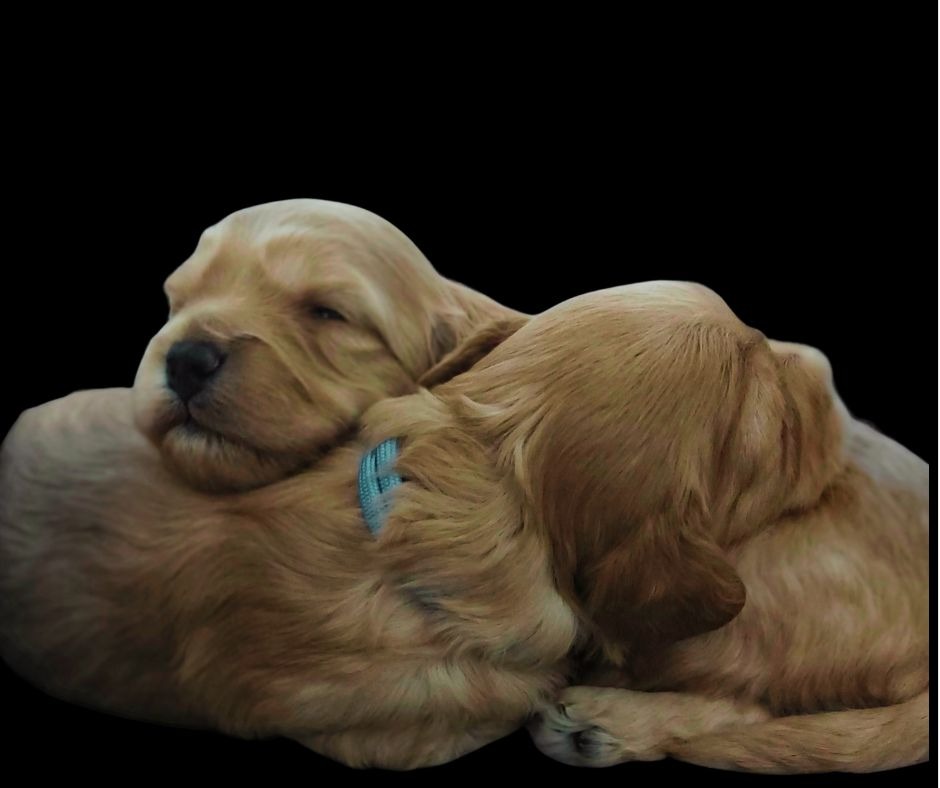
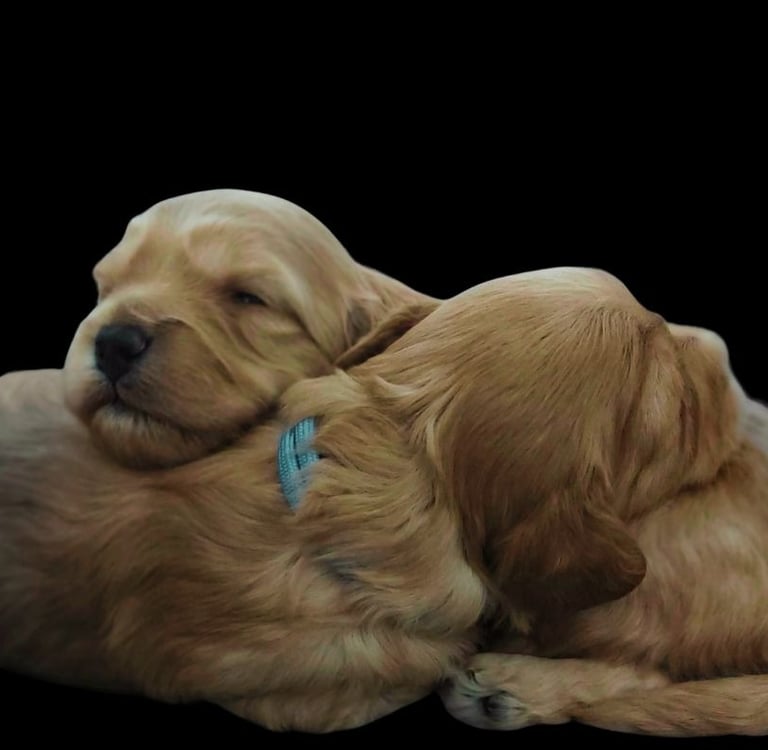
Week 3 is a joy to witness. The pups’ clumsy toddles, wide‑eyed stares, and first little growls are both humbling and hilarious — one moment they’re practising their “first steps,” the next they collapse into what looks like puppy yoga savasana. Survival and bonding are still the focus, but curiosity and determination are now in play. If the squeaks, yawns, and wobbly adventures are anything to go by, the weeks ahead will be lively, chaotic, and endlessly rewarding.
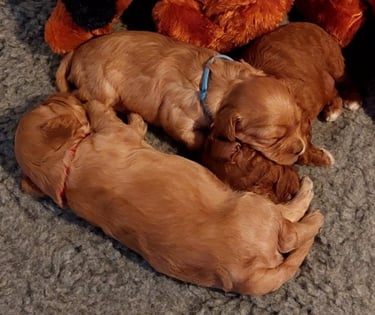
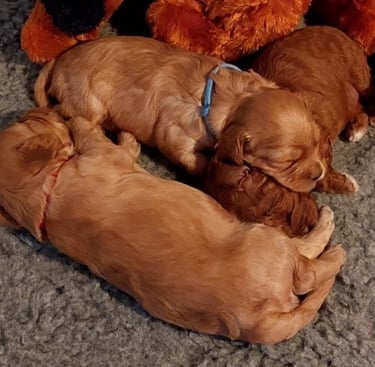
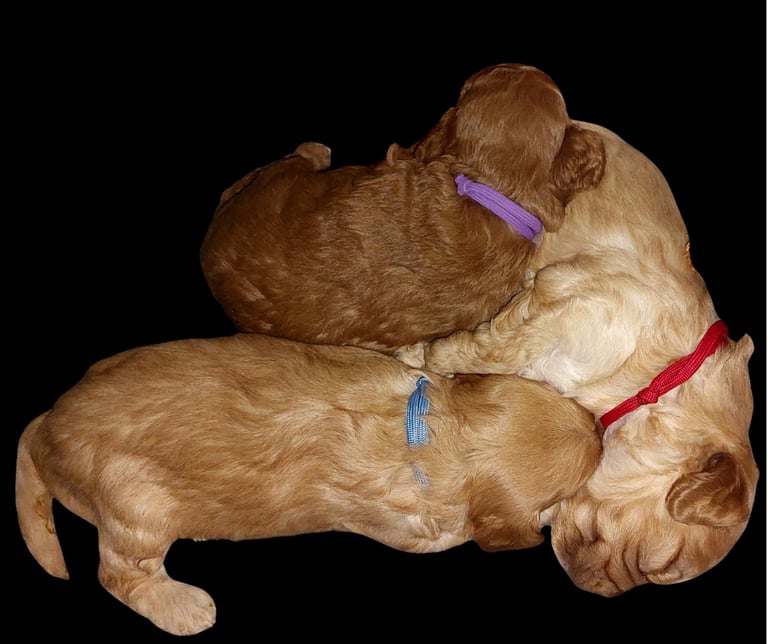
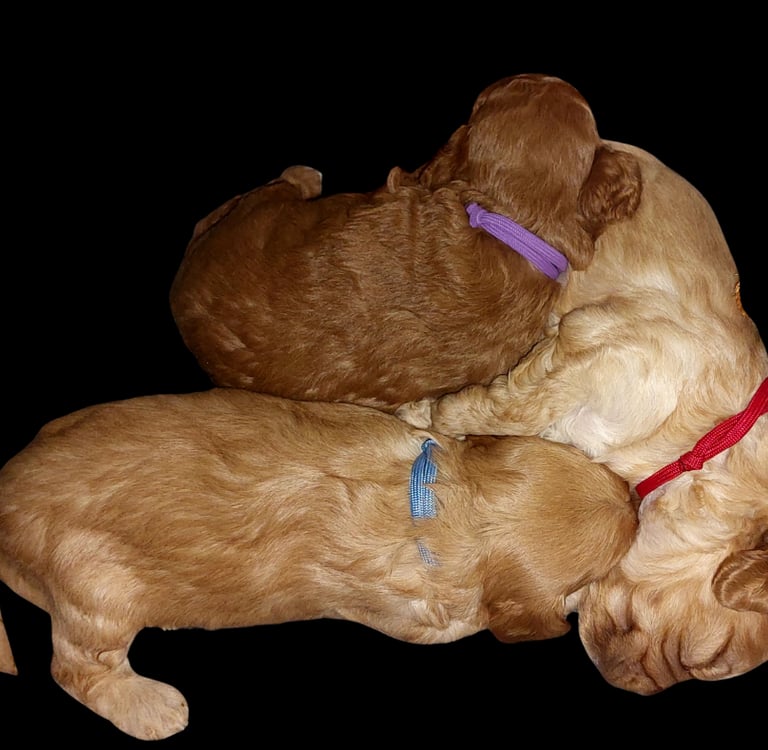
This week the pups had their first worming — much to their disgust — an important preventative step to stop intestinal parasites from stealing nutrients, slowing growth, or passing between littermates and dam.
They also had their nails trimmed. Shorter nails reduce the risk of accidental scratches to Poppet during nursing, prevent nails catching or tearing as the pups' toddle, and help them place their feet correctly for better traction and weight‑bearing. Both procedures are done gently and quickly to minimise stress, and Iis followed by cuddles to comfort the puppies, so handling stays calm and reassuring.
Poppet is producing plenty of milk, though she’s beginning to take short breaks away from the litter — a natural step as the pups grow more independent. Her nutrition, rest, and short daily walks have resumed and remain just as important as the pups’ care.
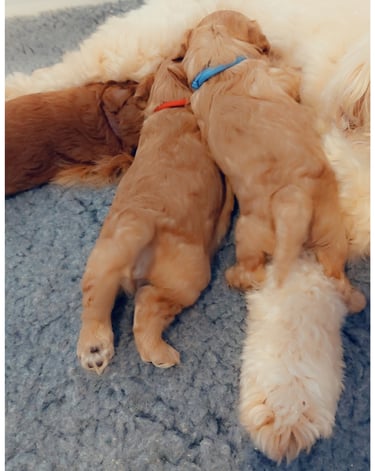
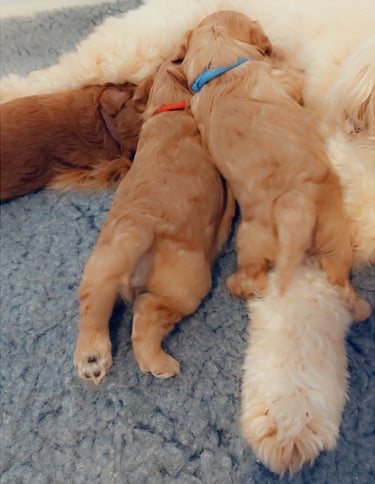
Poppet’s role is shifting too — she’s taking more short breaks away from the box so the pups can self‑regulate and interact more freely. I continue to monitor her comfort, offer quiet praise, and ensure she gets rest and good nutrition.
Play and social dynamics emerge this week: mouthing, pawing, and clumsy play start to teach bite inhibition, emotional regulation, and social boundaries. I watch for who initiates play, who follows, and who prefers to observe, intervening only if play becomes too intense.
Sound desensitisation begins from Day 18 with very brief, controlled exposures. Puppies at this age don’t fear sound, so I use gentle introductions — a spoon on a metal bowl, short clips of household noises, or a few minutes of a puppy desensitisation track — to build positive associations. Examples of sounds introduced gradually include TV, vacuum, doorbells, clapping, music, and traffic. All exposures are closely monitored to ensure no stress; volume and duration are kept low and increased only as the pups remain relaxed. I usually keep the radio or soft music on in the background, so they leave my home with a healthy appreciation for Current Affairs and calm, ambient music :-)
Handling exercises begin in earnest at Week 3 and are always calm and positive. Each session is brief and comforting, designed to normalise human touch and build trust. Typical handling includes:
Ears: gentle rubs and light strokes.
Eyes: brief, soothing covers to familiarise them with gentle restraint.
Belly: circular rubs to encourage relaxation.
Back and tail: slow, reassuring strokes.
Paws and nails: touch and gentle tapping to prepare them for future trims.
Neck and collar area: light handling to ease future collar introduction.
Face: allow puppies to smell our faces, then hold them snug to the chest until settled.
These exercises are never meant to upset or stress the pups; the aim is a positive, predictable experience each time. I continue and gradually increase the handling intensity week by week until they go to their new homes, always watching body language and stopping if a pup shows discomfort.