From Whelp to Wean: Sensory Awakenings
WHELPING BOX SERIES
Marissa
12/28/20255 min read
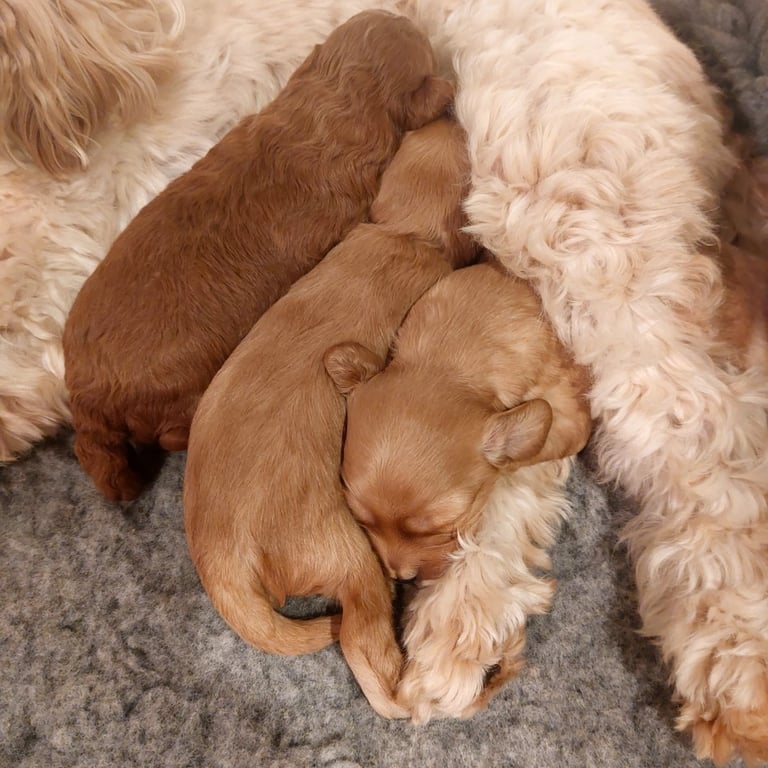
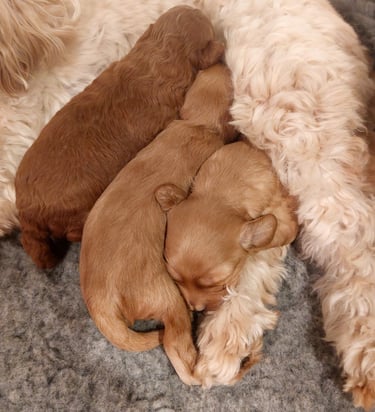
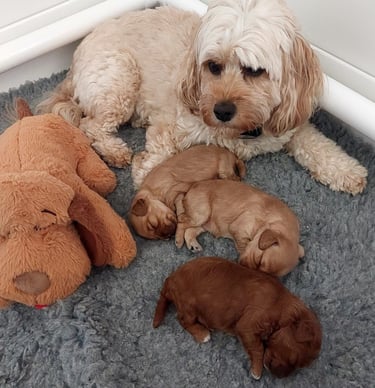
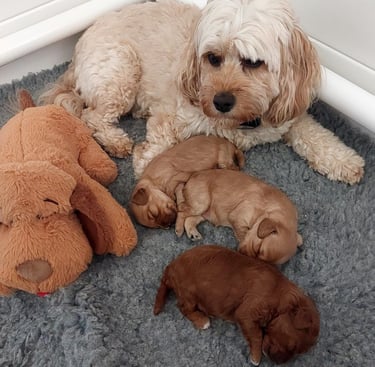
The Toybox Trio are now two-week-old, and the changes are already remarkable.
Their weights have steadily increased, their movements are stronger, and they’re beginning to look less like tiny guinea pigs and more like puppies.
Their eyes are still closed, but I can see the lids loosening, hinting at the big reveal to come.
The whelping box is a hive of squeaks, wiggles, and determined crawls — a far cry from the sleepy pile of fur we saw last week.
Milestone Moments
This week is all about strengthening. The pups are practising their crawl, pushing up with their front legs in what looks like the world’s slowest push‑ups. These movements are driven by primitive reflexes, but they’re laying the foundation for walking in the weeks ahead. Their sense of smell is already active, guiding them unerringly to Poppet’s milk bar. Watching them shuffle and squirm with such determination is both endearing and a reminder of how quickly development happens in these early days.
From Milk to Mush
It’s still all about Poppet’s milk this week, but the pups are nursing with more vigour and efficiency. Their little bellies swell after each feed, and the post‑meal “milk comas” are a regular sight. Colostrum has done its job, and now Poppet’s mature milk is providing the perfect balance of nutrition for growth.
Preparing for the Future
The whelping box remains warm, clean, and secure, but I’m already thinking ahead to the next stage. As their eyes open and their hearing develops, the environment will become more stimulating. For now, I keep things calm and consistent, laying the groundwork for confident pups who will soon be ready to explore beyond their nest.
Future Parents
Week 2 is a reminder of how quickly puppies change. In just 14 days, they’ve gone from helpless neonates to determined little crawlers. Their eyes will open soon, and with that comes a whole new level of interaction. Every weigh‑in, every ENS exercise, and every cuddle is part of shaping the healthy, well‑adjusted pup you’ll one day welcome home. It may look like all wiggles and squeaks now, but these are the building blocks of the confident companion waiting for you.
Socialisation & Bonding
Gentle handling continues daily, and the pups are becoming more accustomed to human touch. ENS and ESI are now part of our routine: brief exercises to stimulate their neurological development and short exposures to safe scents to encourage brain growth. It’s fascinating to think that these tiny interventions — lasting only seconds — can have lifelong benefits in resilience, stress tolerance, and scenting ability. Poppet watches calmly, clearly trusting me to handle her babies, which makes the process even more rewarding.
Health & Care
Daily weigh‑ins continue, and I’m pleased to see steady gains across the litter. Their bellies are round, their coats glossy, and their squeaks strong — all signs of thriving neonates. Poppet is doing beautifully, her appetite is excellent, and she’s producing plenty of milk to keep up with demand. I keep a close eye on her mammary glands, hydration, and overall comfort, because a healthy dam means healthy pups. She’s also enjoying her role as attentive mother, though she’s happy to sneak in a cuddle on my knee when the trio are settled.
Puppy Personalities Emerging
The puppies’ personalities are very similar at this stage — none of them insistently jockeys for the milk bar or consistently sleeps until nudged awake. Most behaviours are still reflex‑driven, and I am keenly observing for the first hints of individuality as I watch each one unfold.


This week has been both heart‑warming and entertaining.
Watching their eyes begin to open and seeing those first wobbly pushes and shuffles fills me with awe — and then they topple into a sleepy heap mid‑crawl, which never fails to make me laugh.
At times it looks like they’re practising yoga poses, only to collapse into what I’d call “puppy savasana.”
These days are still centred on survival and bonding, but now curiosity and determination are creeping in. If the tentative steps, squeaks, and sudden yawns are anything to go by, the weeks ahead promise to be wonderfully lively, slightly chaotic, and endlessly rewarding.
Puppy Spotlights — The Toybox Trio
Winnie
Winnie has been spectacularly overtaken in the weight stakes but is thriving nonetheless — she’s now 563 g, a gain of 364 g since birth. Her darker coat and white markings make her easy to pick out, and she’s moving with surprising strength; her eyes are slowly beginning to open, too. She still nurses with steady determination and seems perfectly content to share the spotlight with her siblings.
Teddy
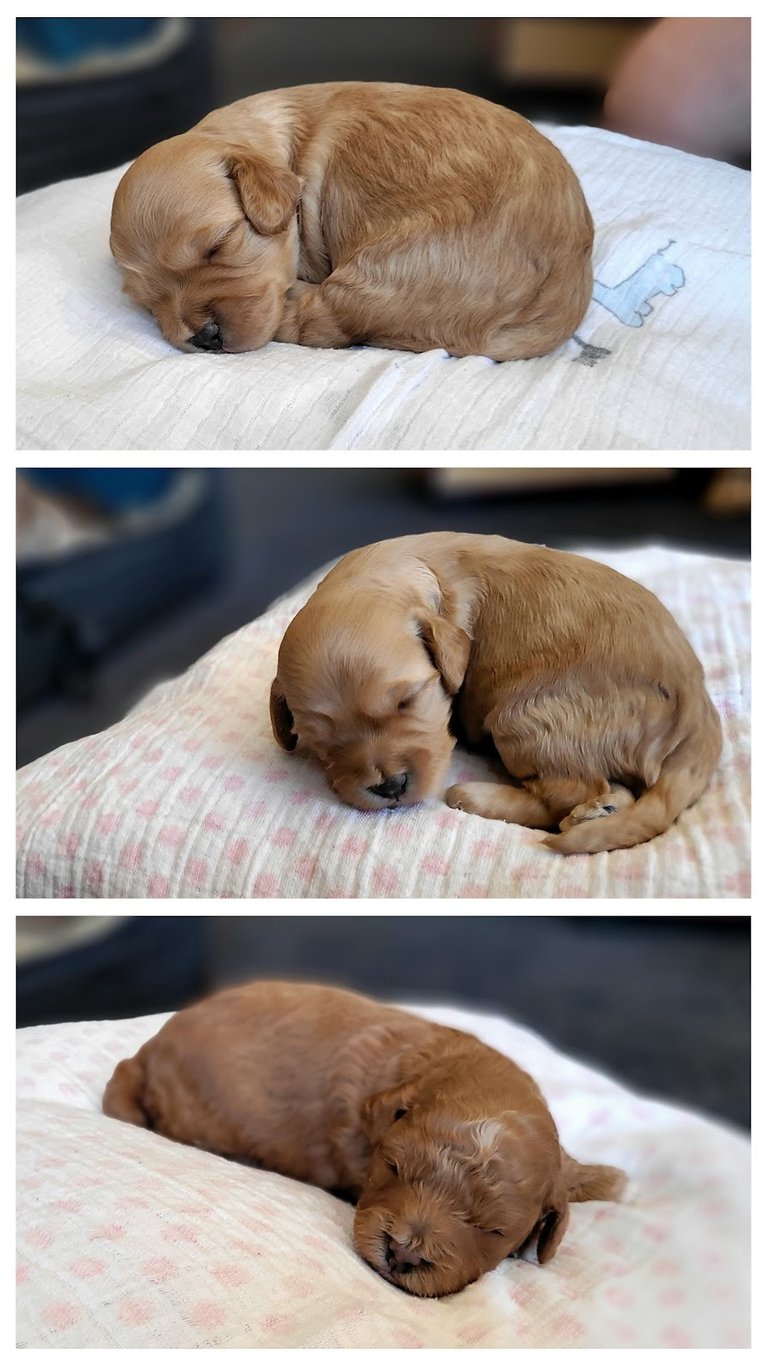
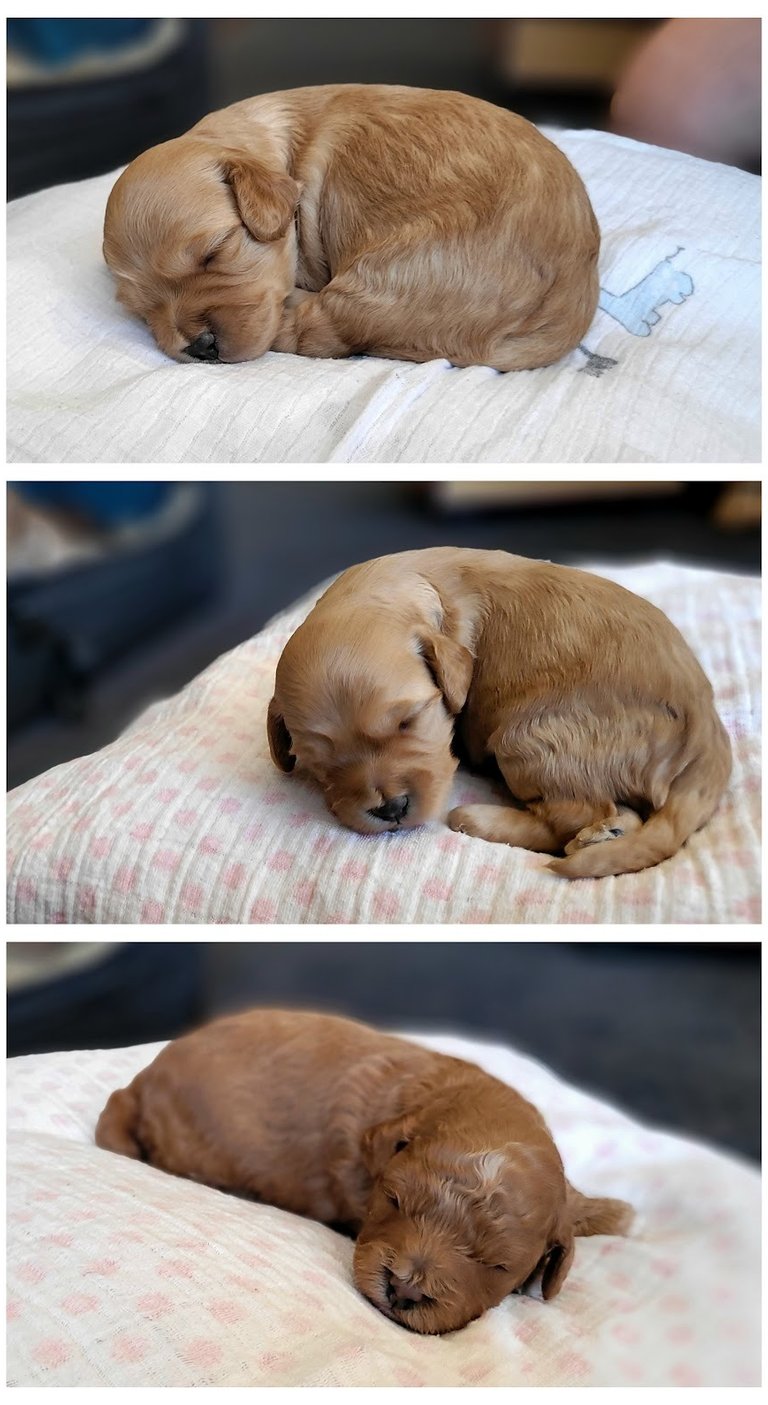
Teddy, who started life as the smallest at 164 g, has been the biggest surprise and is now 583 g, up 419 g. He was the first to start opening his eyes and is proving to be a feisty little explorer already. His apricot coat is soft and warm, and he feeds with the same quiet efficiency as the others before falling into a deep milk coma.
Jemima
Jemima leads the pack in weight gain this week at 610 g, a rise of 414 g since birth. Her apricot colouring is so similar to Teddy’s that I’ve had to resort to a quick “genital check” to tell them apart now that they’re nearly the same size. Like her siblings, she moves about confidently, though her eyes are still firmly shut for now.
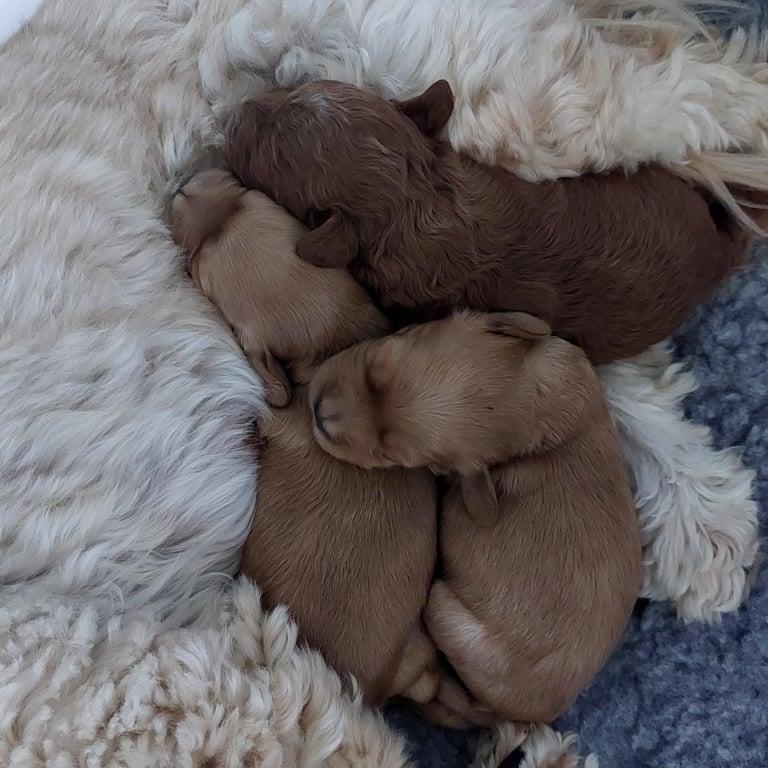
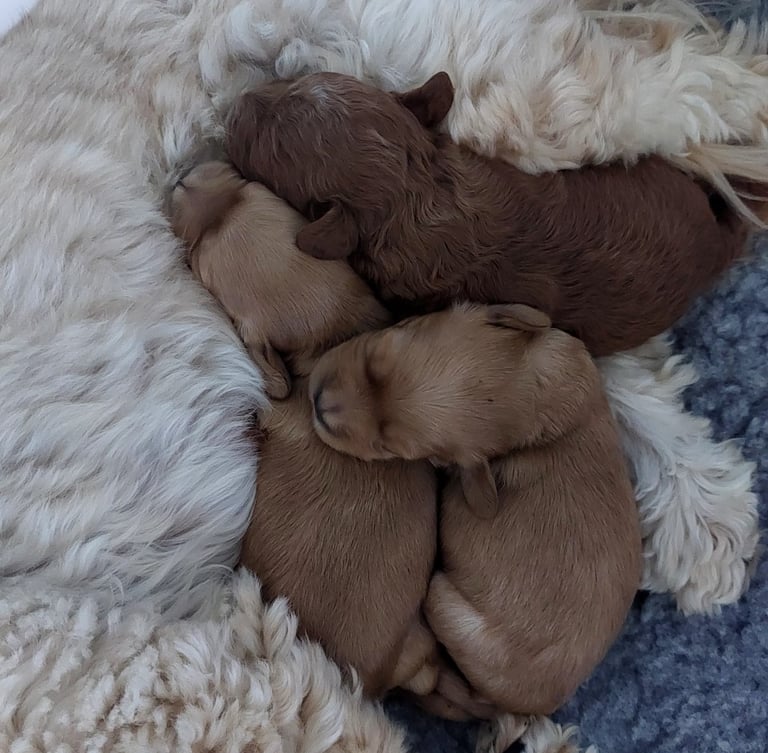
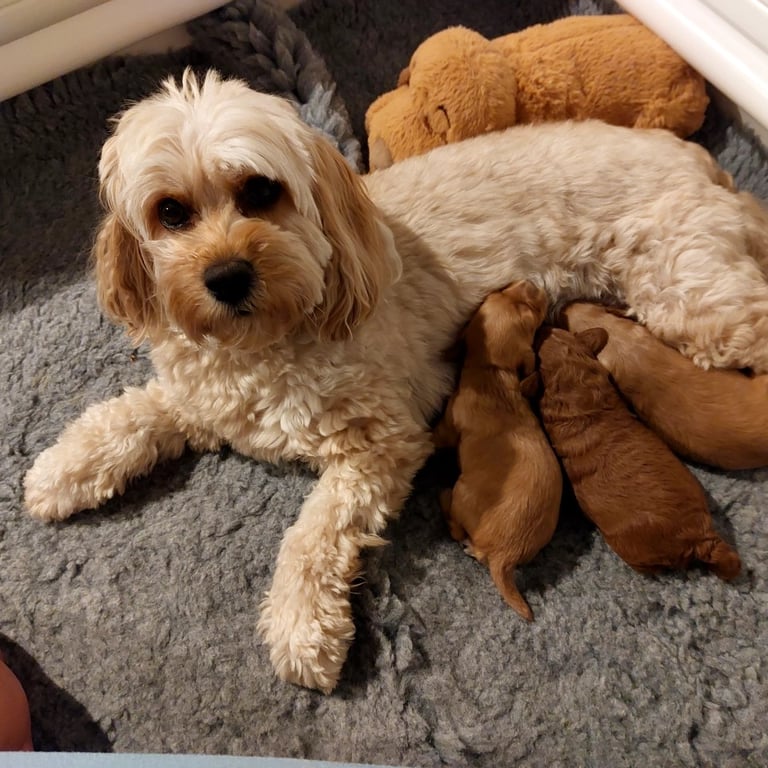
I use Vet Bed in the whelping box because it gives the pups the perfect start: its textured pile provides controlled traction so they can push up and crawl without slipping, which helps prevent compensatory splaying and encourages proper muscle activation. The soft cushioning also protects tiny joints as they begin to bear weight, letting them practise weight‑shifting and balance without micro‑injuries or early fatigue. Because it’s warm, stable, and inviting, Vet Bed encourages more confident exploration—more micro‑movements mean stronger stabiliser muscles.