From Whelp to Wean: Problem Solvers and Playmates
FROM WHELP TO WEAN
Marissa
1/19/20263 min read
The Whelping Box Update
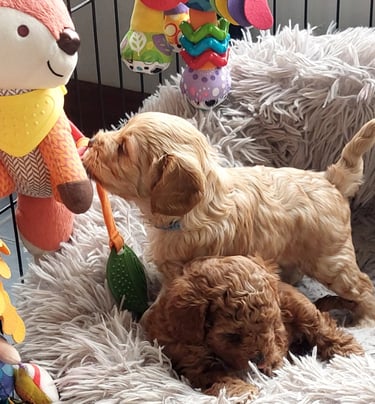
Days 29–35 mark the beginning of the socialisation period, and the Toybox Trio are diving into it with all the enthusiasm of toddlers discovering their legs… and their opinions. Their movements are more coordinated, their play has purpose, and their curiosity is officially limitless.
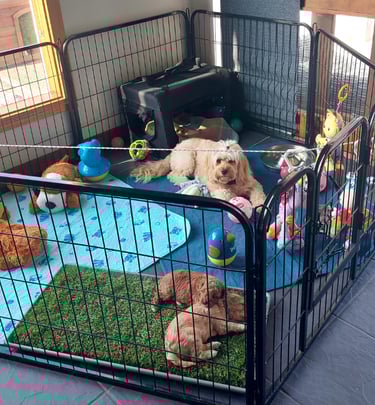
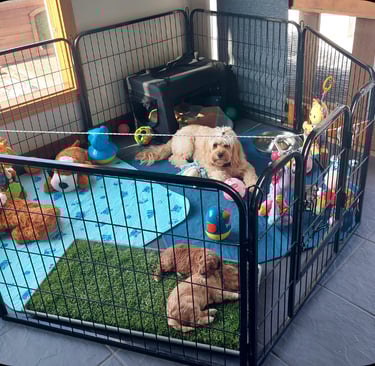
This week, I set up a second Playpen in the living area, giving the pups front‑row seats to the soundtrack of daily life — clattering dishes, footsteps, conversations, and the occasional, “Poppet, leave the laundry basket alone.” It has quickly become a lively little classroom where lessons in play, boundaries, and independence unfold in real time.
Week 5 is all about confidence and mischief. The puppies are starting to look and act like miniature dogs — chasing toys, wrestling with their siblings, and experimenting with their voices (their tiny growls are fierce… in a marshmallow‑soft sort of way). Their personalities are shining through more clearly each day, and their little brains are soaking up new experiences like sponges.
It’s a bit like puppy kindergarten — joyful chaos with just enough structure to keep things moving in the right direction.
Milestone Moments
Mobility: Running, trotting, and even attempting clumsy little jumps. Coordination improves daily.
Teeth: Milk teeth are fully erupted, and chewing is now a favourite hobby.
Play: Wrestling, tugging, and toy chasing dominate their day. Play is more interactive and purposeful.
Awareness: Puppies recognise familiar voices and respond with tail wags, barks, and eager approaches.
Elimination: Toilet habits continue to improve, with pups consistently moving away from sleeping areas.
Future Parents
Week 5 is when puppies officially enter their mischief‑maker era. They’re playful, curious, and brimming with personality. Families can expect pups at this stage to be interactive, resilient, and eager for more structured socialisation. Their confidence blossoms quickly, and all those adorable little quirks you’ll fall in love with start to shine through.
This week is also about curiosity, cognition, and connection. Puppies begin solving simple problems, engaging in richer social play, and responding to early training cues. With structured enrichment, gentle handling, and steady emotional support, they grow into confident learners and future companions who are adaptable, thoughtful, and ready to take on the world — one wobbly adventure at a time.
Playschool Puppy Curriculum
The Toybox Trio are now fully immersed in Playschool, and their structured Puppy Curriculum expands this week to include:
Environment: Soft barriers, tunnels, wobble boards, and low steps to encourage balance and problem‑solving.
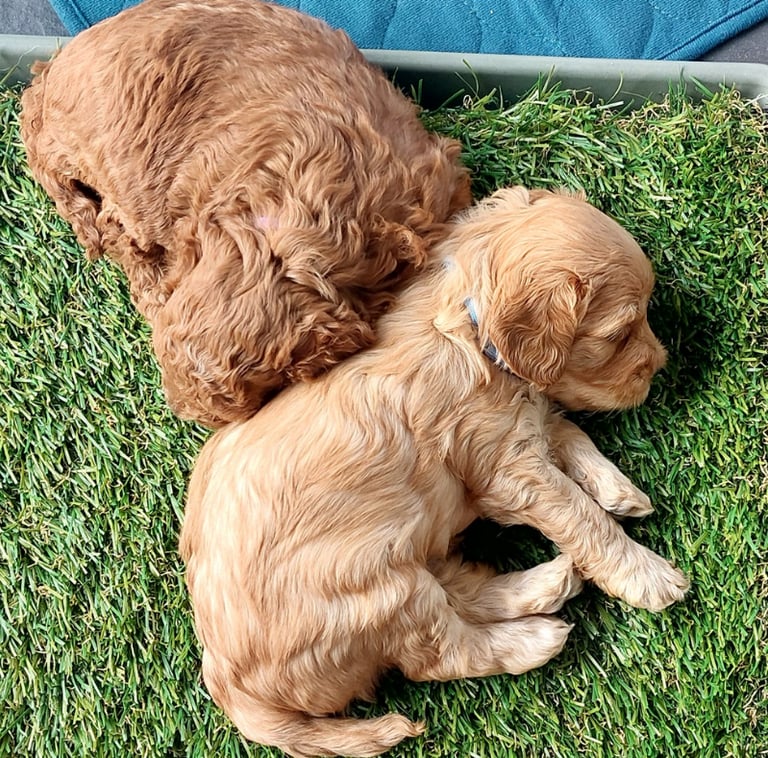
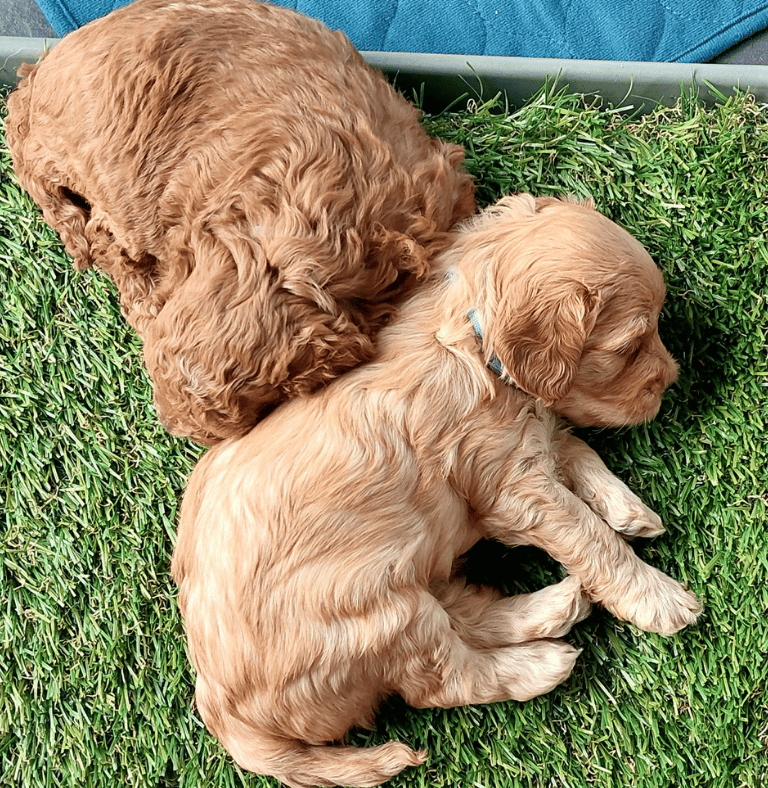
Textures: Daily rotation of faux grass, rubber mats, crinkle fabric, and uneven terrain to keep exploration fresh.
Solo play: 2–5-minute sessions in safe spaces to build emotional independence and prepare for crate training.
Crate conditioning: Short naps inside the crate with the door closed, building comfort and routine.
Name association: Repeated during play, feeding, and handling, paired with eye contact and gentle praise.
Recall games: Introduced with soft voice and food rewards — tiny foundations for future training.
Handling exercises: Gentle brushing, paw handling, and brief collar introductions.
Sound desensitisation: Continued exposure to household noises, music, and outdoor sounds, always monitored for stress.
Temperament tracking focuses on curiosity, independence, and resilience. Poppet’s calm presence continues to influence the pups’ confidence, even as she spends more time away.
Health & Care
Weekly weigh‑ins continue, and all pups are thriving with strong, steady gains. I monitor teeth, gums, eyes, and overall body condition to ensure everyone is developing beautifully.
Poppet is now spending much more time outside the box, stepping in mainly for nursing and comfort. Her nutrition, rest, and fitness remain priorities, and daily walks help her balance motherhood with recovery.
I continue to observe:
Confidence in new environments — who explores first and who prefers to assess.
Recovery after novelty or mild stress — how quickly each pup settles after surprises.
Toy and texture preferences — early hints at comfort and play style.
Crate comfort levels — voluntary entry and short naps with the door closed.
These notes guide enrichment activities and help me match puppies with homes that suit their emerging temperaments.
From Milk to Mush
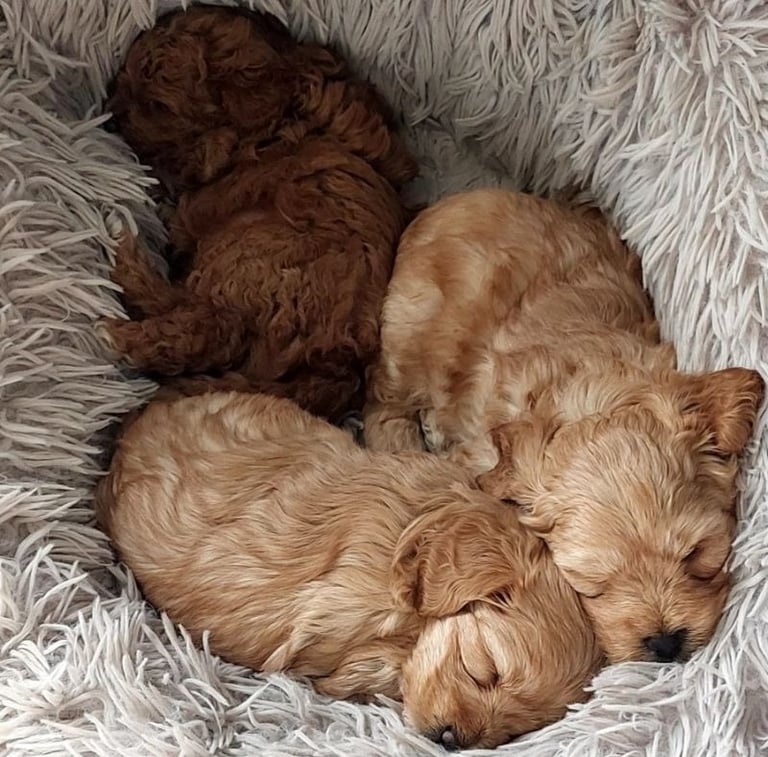
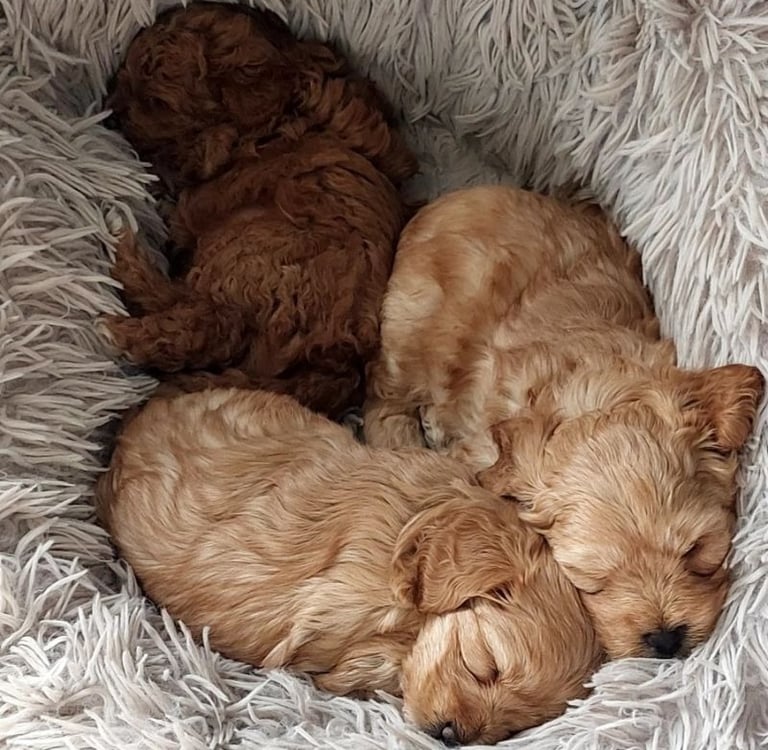
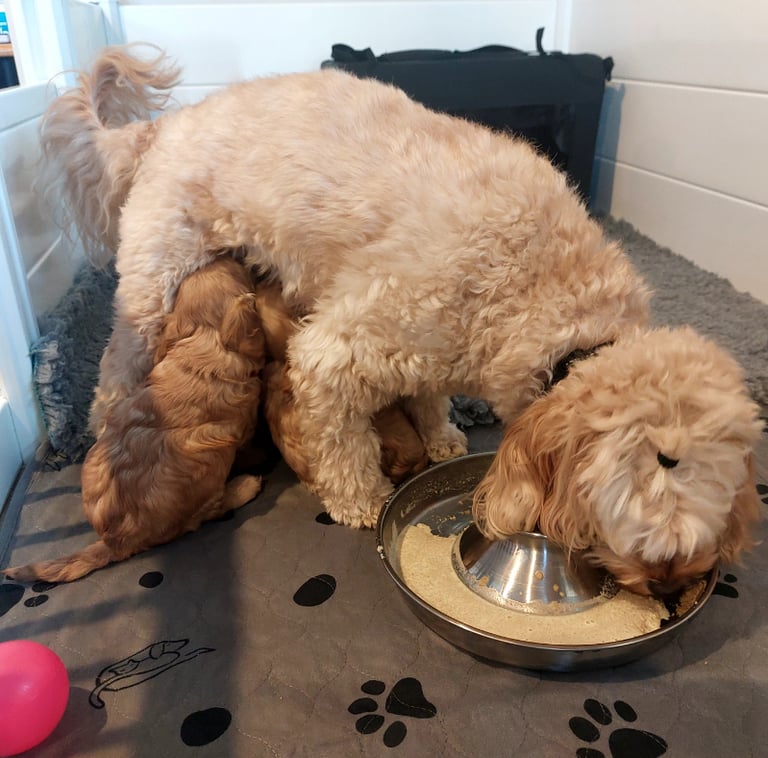
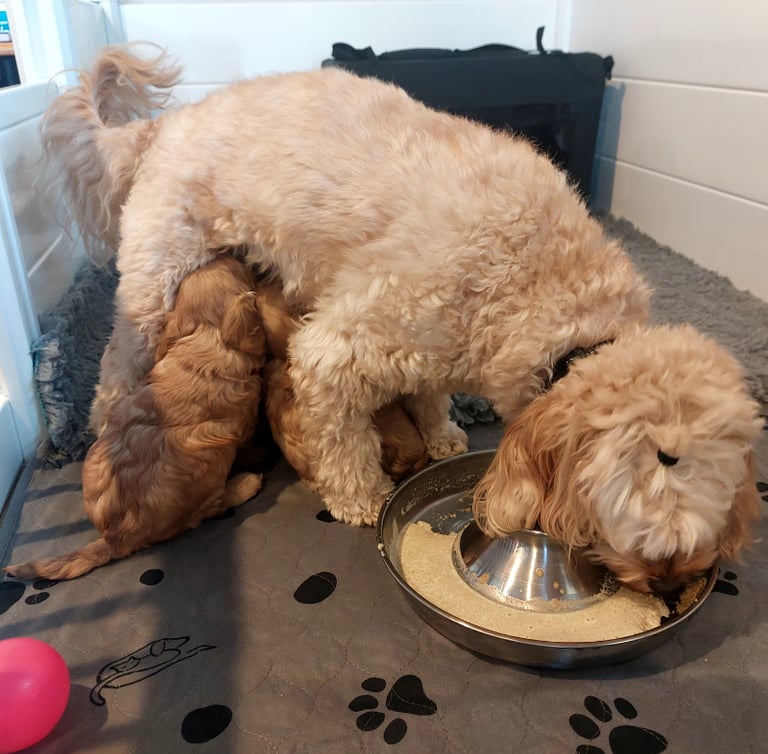
Weaning is now in full swing. The puppies are experimenting with soft food alongside Poppet’s milk — lapping, chewing, and occasionally wearing their dinner like avant‑garde fashion. It’s messy, hilarious, and essential for teaching them to eat independently and preparing them for solid food in the weeks ahead.